Every doctor begins the same way, surrounded by books, lectures, and structured learning. The early years of medicine are built on absorbing information, memorizing systems, and understanding how the human body is supposed to function. It is a world of certainty, where answers exist and problems follow defined patterns.
The first encounter with real patients changes everything. What once seemed clear becomes uncertain. Conditions do not present themselves as neatly as they do on paper. Symptoms overlap, histories are incomplete, and patients often describe their problems in ways that require interpretation rather than simple recognition.
In textbooks, a diagnosis is often straightforward. In reality, it unfolds gradually. A patient may not know how to explain what they are feeling. Fear or discomfort can alter how they communicate. Important details may be overlooked or misunderstood. A doctor must learn to piece together fragments of information and form a complete picture.
The transition also introduces the weight of responsibility. In training, decisions are guided and supervised. In practice, those decisions carry real consequences. Every choice matters. Every action has an impact on another person’s life. This awareness creates a level of pressure that no classroom can replicate.
Experience begins to fill the gaps that theory leaves behind. Patterns become more familiar, but they are never identical. A doctor learns to trust observation, to notice subtle differences, and to act with both caution and confidence. Over time, judgment becomes sharper, shaped by countless interactions and outcomes.
Communication becomes just as important as clinical knowledge. Patients are not simply cases. They are individuals with concerns, expectations, and emotions. Understanding how to listen, how to reassure, and how to guide someone through uncertainty becomes a critical part of care. This is not something that can be fully taught in advance. It develops through real encounters.
There is also the reality that not everything goes as planned. Unexpected outcomes are part of practice. Some situations challenge even the most experienced professionals. These moments are difficult, but they contribute to growth. They reinforce the need for adaptability and continuous learning. Reinfircw the idea that need for adaptibilty
The transition from book knowledge to real patients is not a single step. It is an ongoing process. Even after years in practice, new situations arise that require fresh thinking. Medicine evolves, and so must those who practice it.
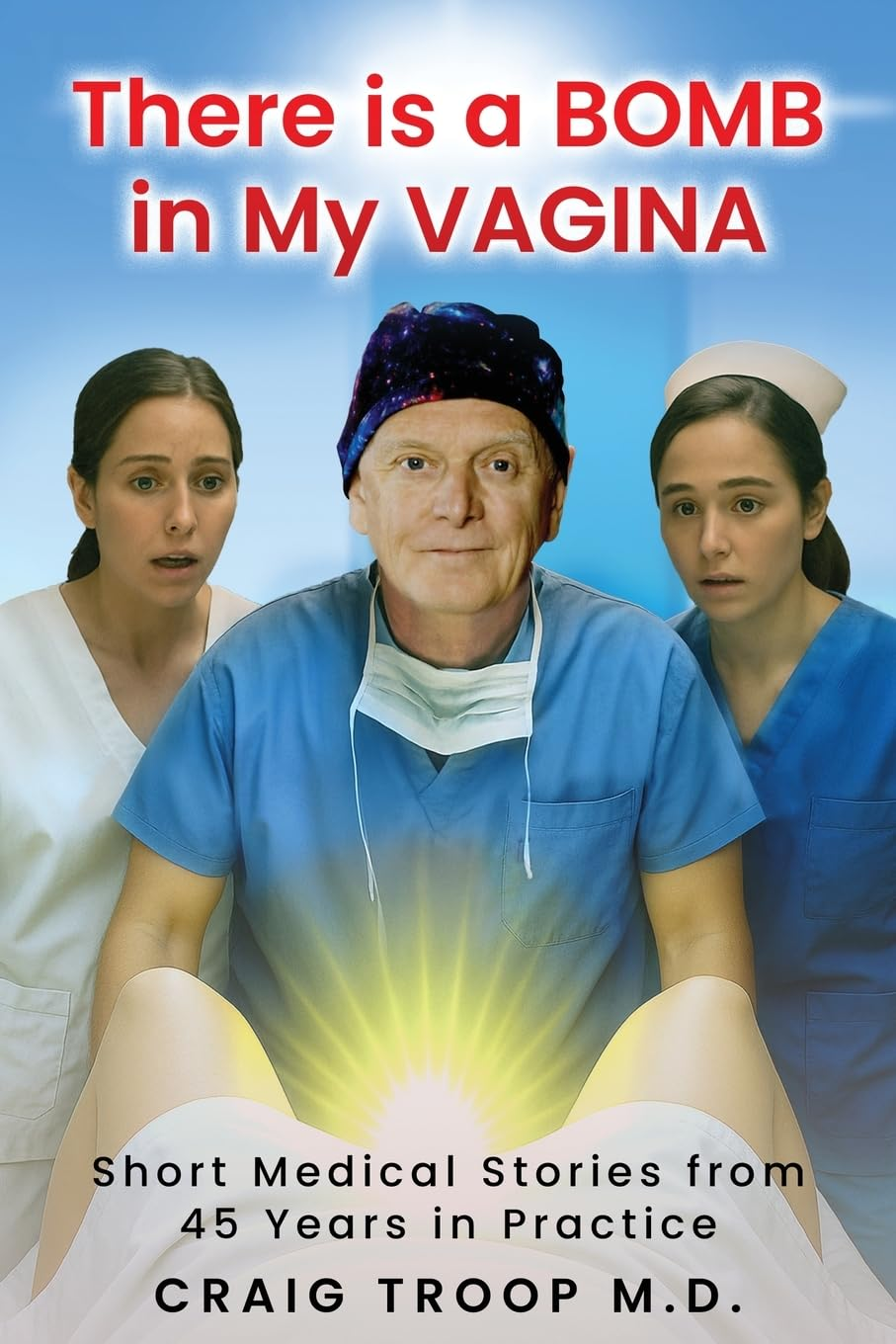
This journey is captured in There is a Bomb in My Vagina: Short Medical Stories from 45 Years in Practice by Craig A. Troop M.D. The book reflects decades of moving beyond theory into the realities of clinical work. It presents moments where knowledge alone was not enough, and experience shaped the outcome.
Through a series of real-life stories, the author illustrates how unpredictable patient care can be. Each account highlights the challenges of applying what is learned in books to situations that rarely follow a script. These stories offer insight into the true nature of medical practice, where decisions are made in real time and outcomes are never guaranteed.
For readers, this perspective provides a deeper understanding of what doctors face beyond their training. It reveals the complexity of the transition and the skills that develop along the way.
In the end, medicine is not defined by what is memorized. It is defined by how that knowledge is used when it matters most.
Get Your Copy On Amazon: https://www.amazon.com/dp/196964446X/