Hospitals are often imagined as places of precision, calm coordination and controlled outcomes. In reality, the emergency room is something far more unpredictable, a space where patients, families and physicians collide under pressure, often with incomplete information and heightened emotion. That collision is at the heart of the medical memoir by Craig A. Troop M.D., There Is a Bomb in My Vagina, a collection of real-life stories drawn from over 45 years in emergency medicine and anesthesiology.
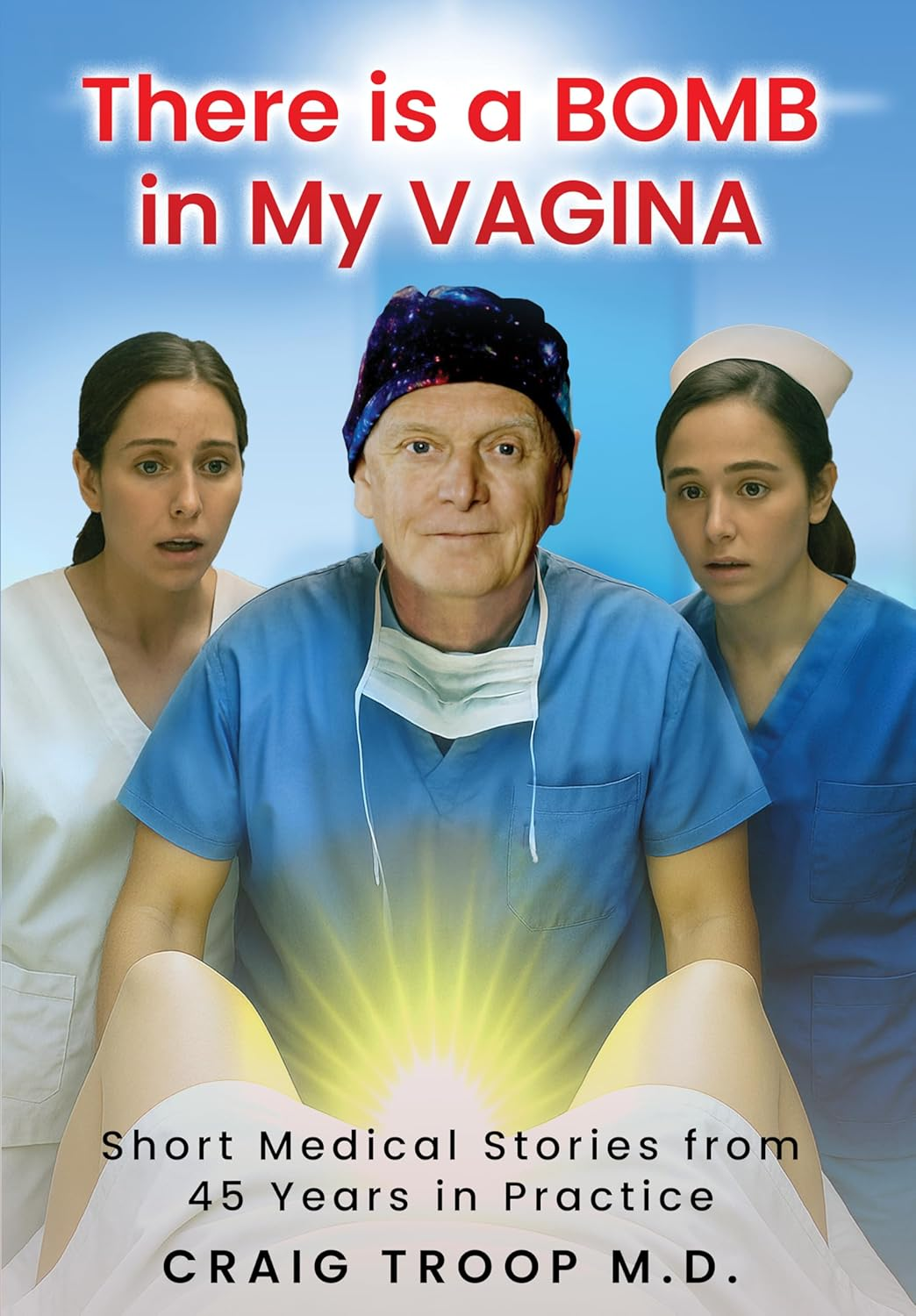
These are not fictional dramatizations. They are lived moments from the front lines of care where decisions are made in seconds, emotions run high and communication can mean the difference between clarity and confusion.
In the emergency room, patients rarely arrive alone in their experience. Families arrive with them sometimes physically, sometimes emotionally and often in states of shock, denial or fear. Physicians must not only assess and treat the patient, but also navigate the complex emotional landscape of those watching everything unfold.
This is where collisions happen.
A medical emergency is never just medical. It is psychological, social and deeply human. Families may disagree with one another, question medical decisions or struggle to process sudden news. Physicians, meanwhile, must remain focused on diagnosis, stabilization and treatment while communicating clearly under pressure. The result is a dynamic environment where misunderstanding is common and tension is almost inevitable.
Yet within this intensity, unexpected moments of humor often emerge.
The memoir highlights how humor in medicine is rarely intentional entertainment; it is often situational, arising from miscommunication, stress or the sheer unpredictability of human behavior. A phrase misheard, a misunderstanding in tone or a dramatic reaction to clinical news can shift a room’s emotional energy instantly. These moments do not diminish the seriousness of care; instead, they reveal how fragile and complex communication can be when emotions are high.
Emergency physicians quickly learn that clarity is not guaranteed, even with careful explanation. Medical terminology, urgent decisions and emotionally charged updates can be interpreted in unexpected ways. Families may hear what they fear rather than what is said. Patients may respond to fear with humor, denial or confusion. Doctors, in turn, must adjust their communication constantly, balancing honesty with compassion.
In anesthesiology, another focus of the book, communication is different but equally critical. Patients move rapidly from consciousness to unconsciousness and back again, often with little memory of what occurred in between. Families rely entirely on the medical team for understanding what happened during surgery. Every word matters, every explanation carries weight and every interaction shapes trust.
There Is a Bomb in My Vagina brings these interactions to life through real stories that are at times intense, at times emotional and at times unexpectedly funny. Humor appears not as a distraction from medicine, but as a reflection of its humanity. In high-pressure environments, even small misunderstandings can take on outsized meaning and later become stories that clinicians remember for years.
What emerges from these accounts is a deeper understanding of how medicine actually works at the human level. It is not a linear process of diagnosis and treatment. It is a negotiation between urgency and understanding, between science and emotion, between what is said and what is heard.
The book also reveals how physicians themselves are shaped by these collisions. Over decades of practice, they develop resilience, adaptability and sometimes a darkly humorous perspective that helps them process the weight of repeated exposure to crisis. This is not detachment; it is survival.
Ultimately, There Is a Bomb in My Vagina offers readers a rare look into the real emergency room: a place where patients, families and doctors intersect in moments of vulnerability. And in those intersections, alongside fear and urgency, there is often something unexpected humor that emerges not despite the situation, but because of how deeply human it all is.
Get Your Copy On Amazon: https://www.amazon.com/dp/196964446X/